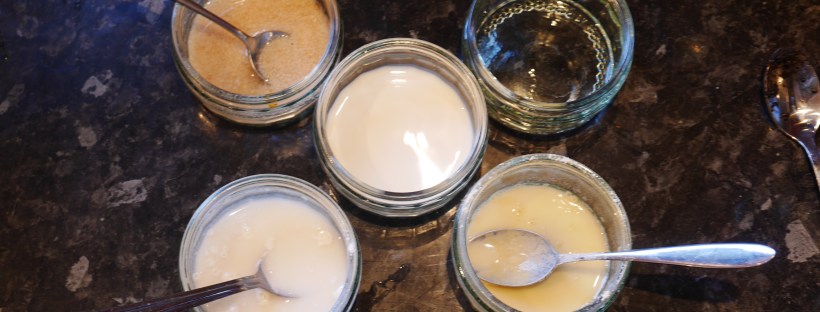
I’ve been looking into egg substitutes and using them successfully in baking, and now I’ve been trying out ways of making breadcrumbs stick to chicken without using eggs. When I’m baking the chicken- as with my Crumby Chicken, I had been using yogurt. However, I didn’t think this would hold up under frying, and I’m now cutting out soy so finding friendly yogurt is more challenging.
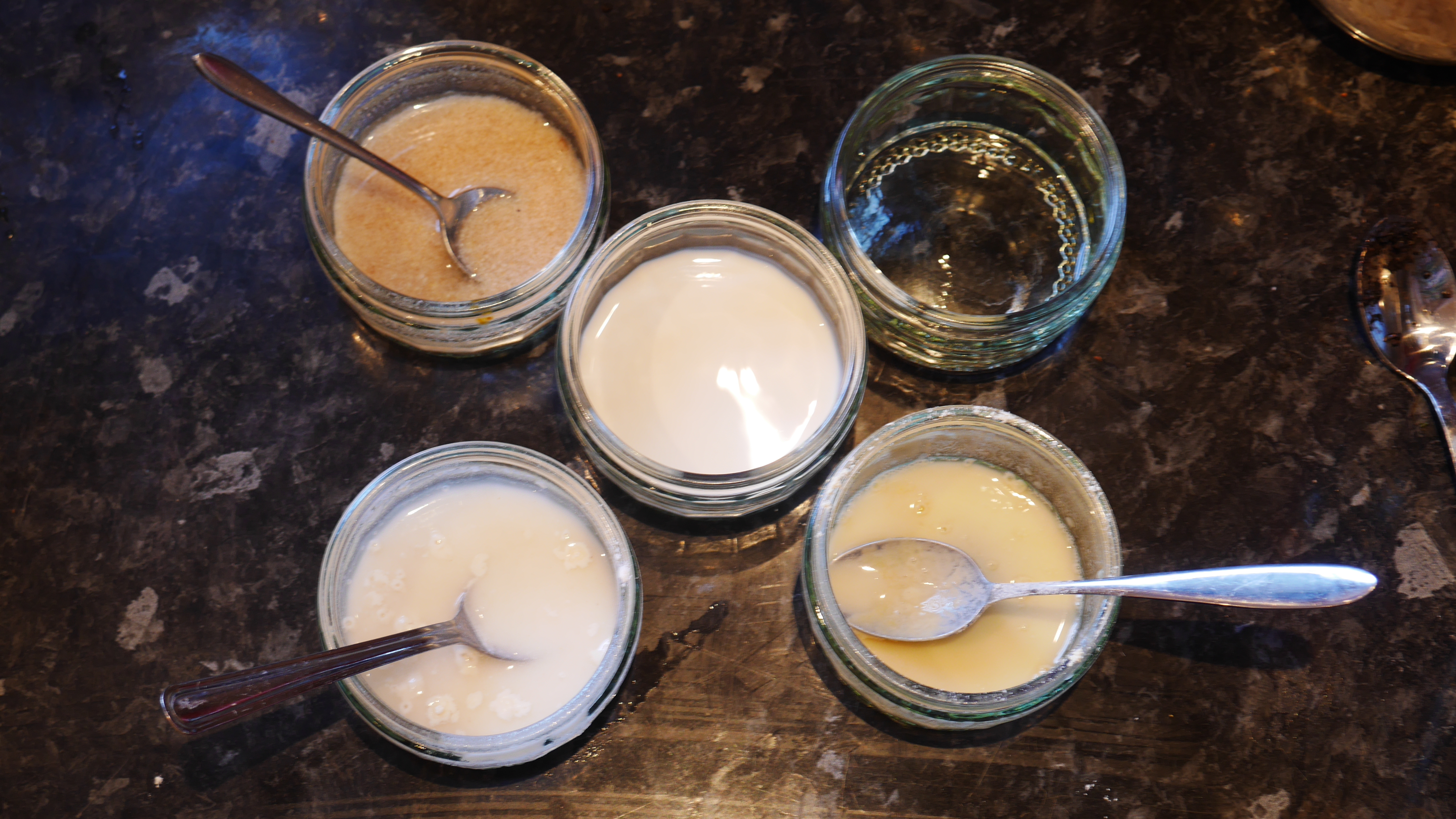
I’ve tried out a few different permutations, and you can see the results below. I tried out different elements for the first and second stages, and used breadcrumbs for all of the final stages. I used courgettes rather than chicken because I didn’t want to waste too much food if (when!) it went wrong.
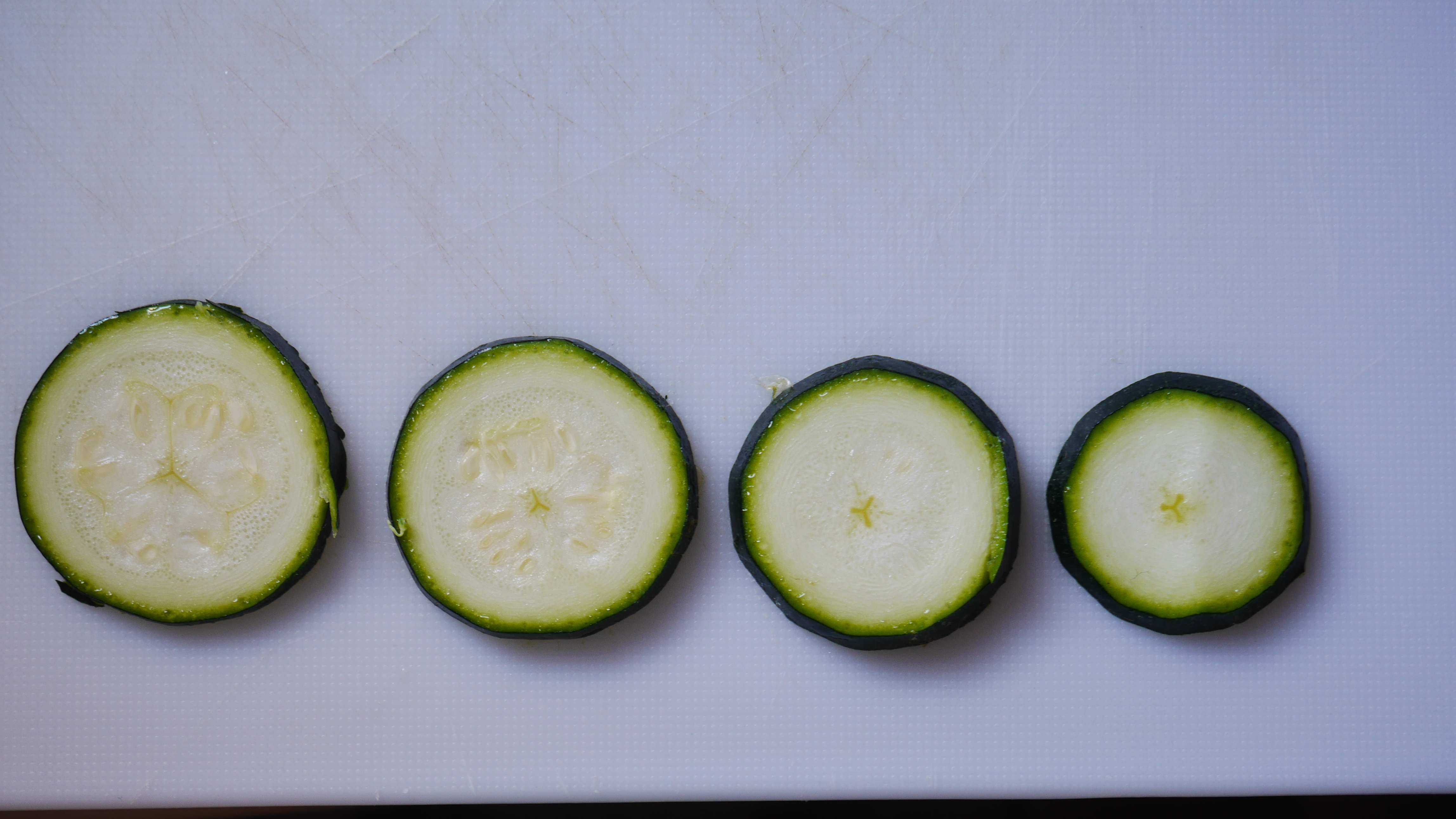
For the initial coating, I went with plain flour, as this is what I normally use, and I also used my normal breadcrumbs for the outer coating. I cooked all of the courgette rounds in a pan over a medium high heat using vegetable oil. I found you needed quite a lot of oil.
Trial 1: Oil
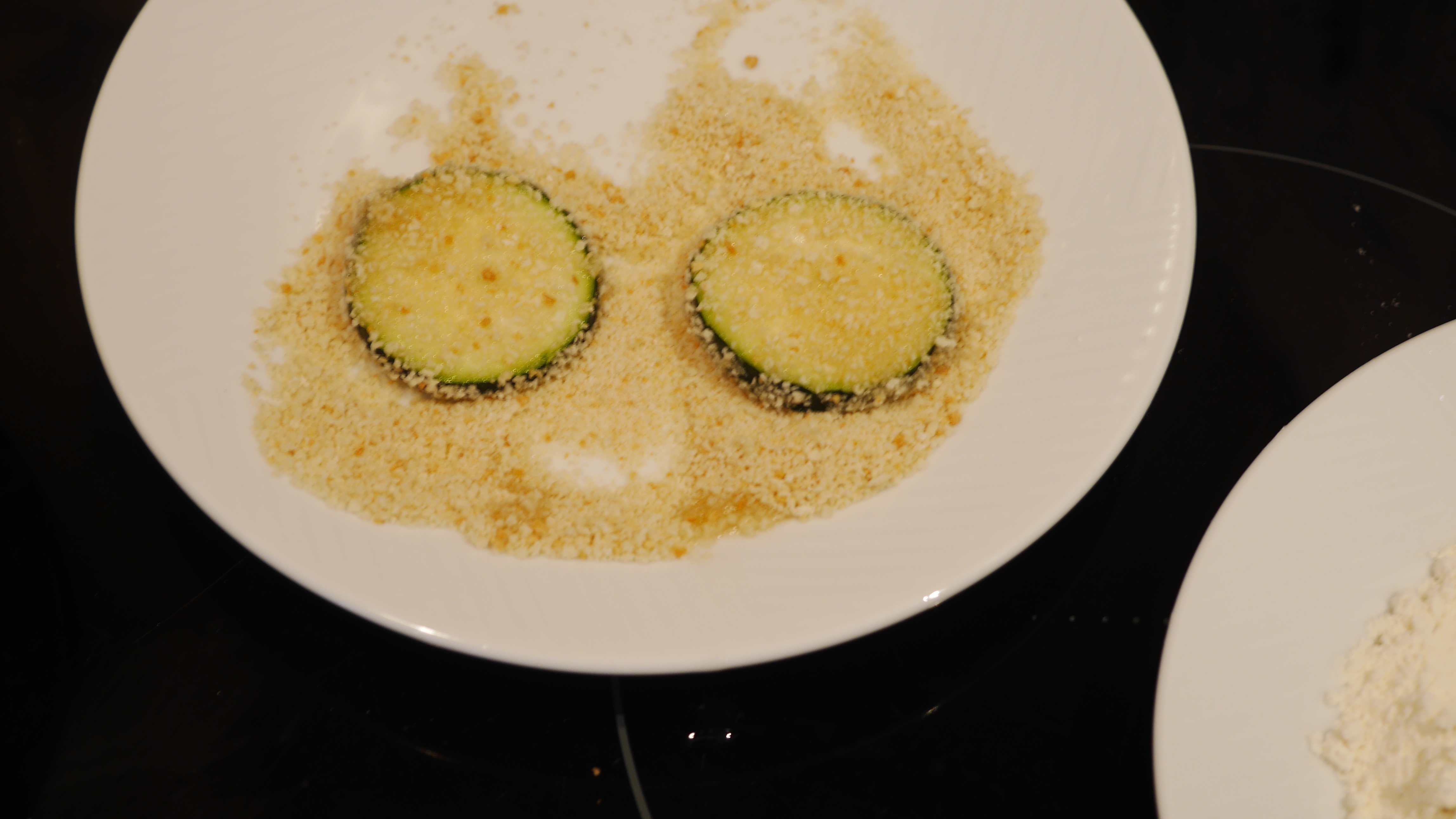
I made a start with the oil, as I needed to let the other liquids sit for a little to get to work. It was really easy to cover the floured courgette in oil, and then to coat that in breadcrumbs. They clung really well and looked great before I started to cook them.
However, on introducing it to a hot pan, all the breadcrumbs came straight off and started burning into the pan. It’s a definite NO for oil.
Trial 2: Oat Cream
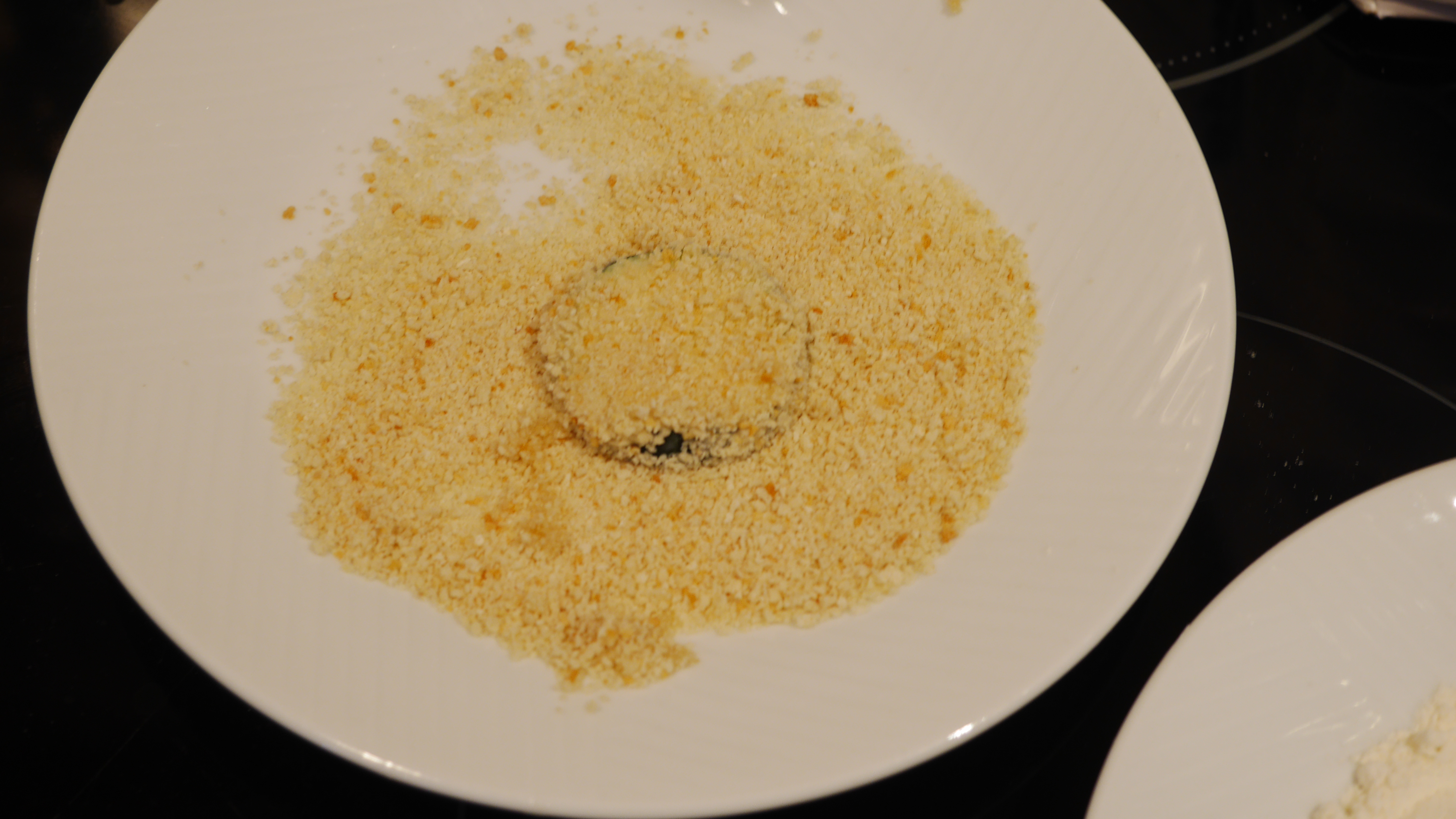
Lots of the suggestions I’d seen online were for vegan mayo, so I figured why not give something dairy-ish a go. I plumped for oat cream as I thought millk by itself would be too thin. There was much better breadcrumb stickage with this one. There was still some breadcrumb loss in the pan, but significantly less than with the oil.
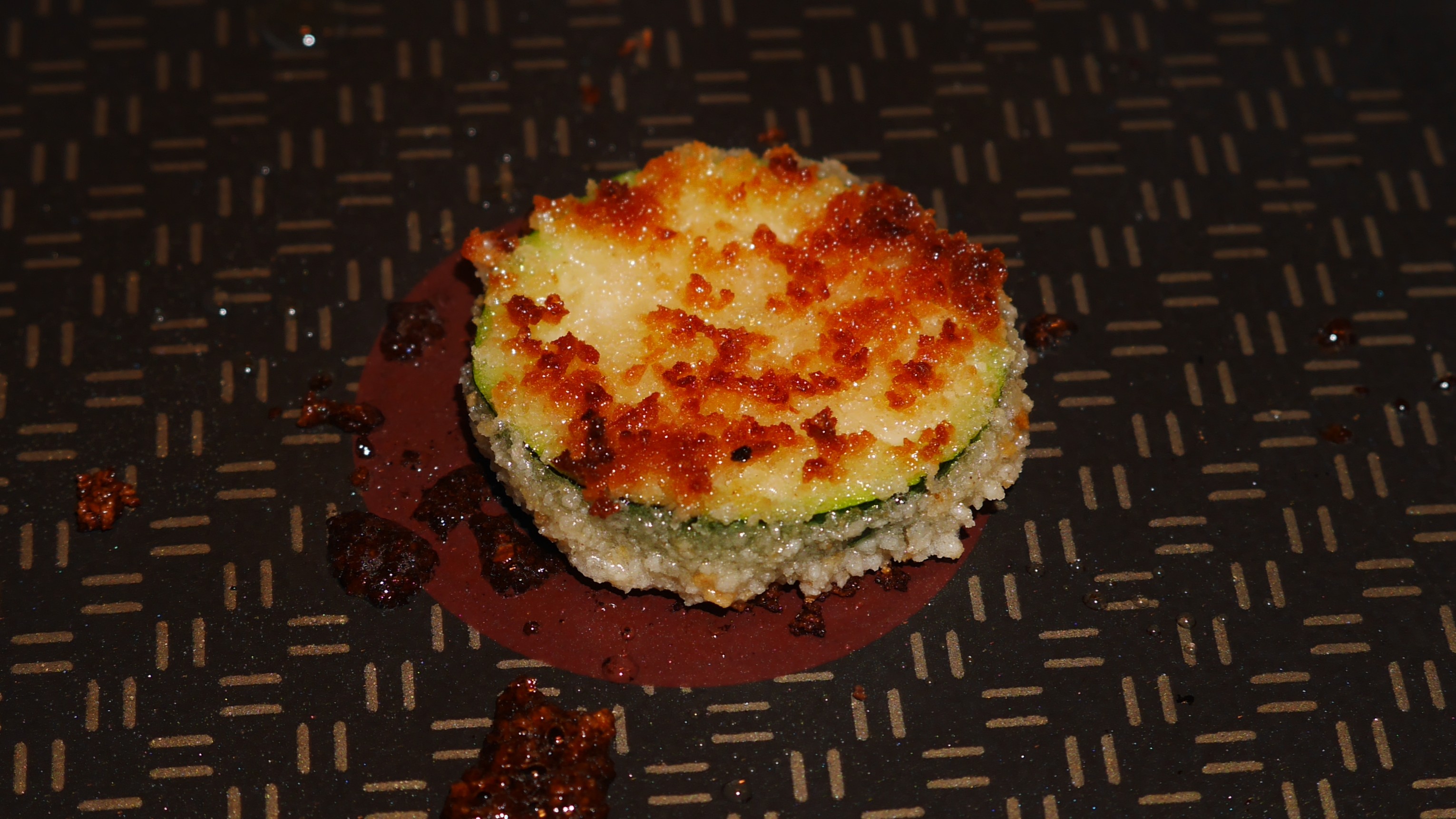
As this one looked vaguely edible, I thought I’d give it a go. It was pretty good.
I also decided to chill the courgette to see if that would help things along. I breaded the slide and refrigerated it for about 10 minutes. This was not a good idea, and was similar to the outcome for the oil, so I really wouldn’t recommend chilling before frying.
Trial 3: Gram Flour and Water
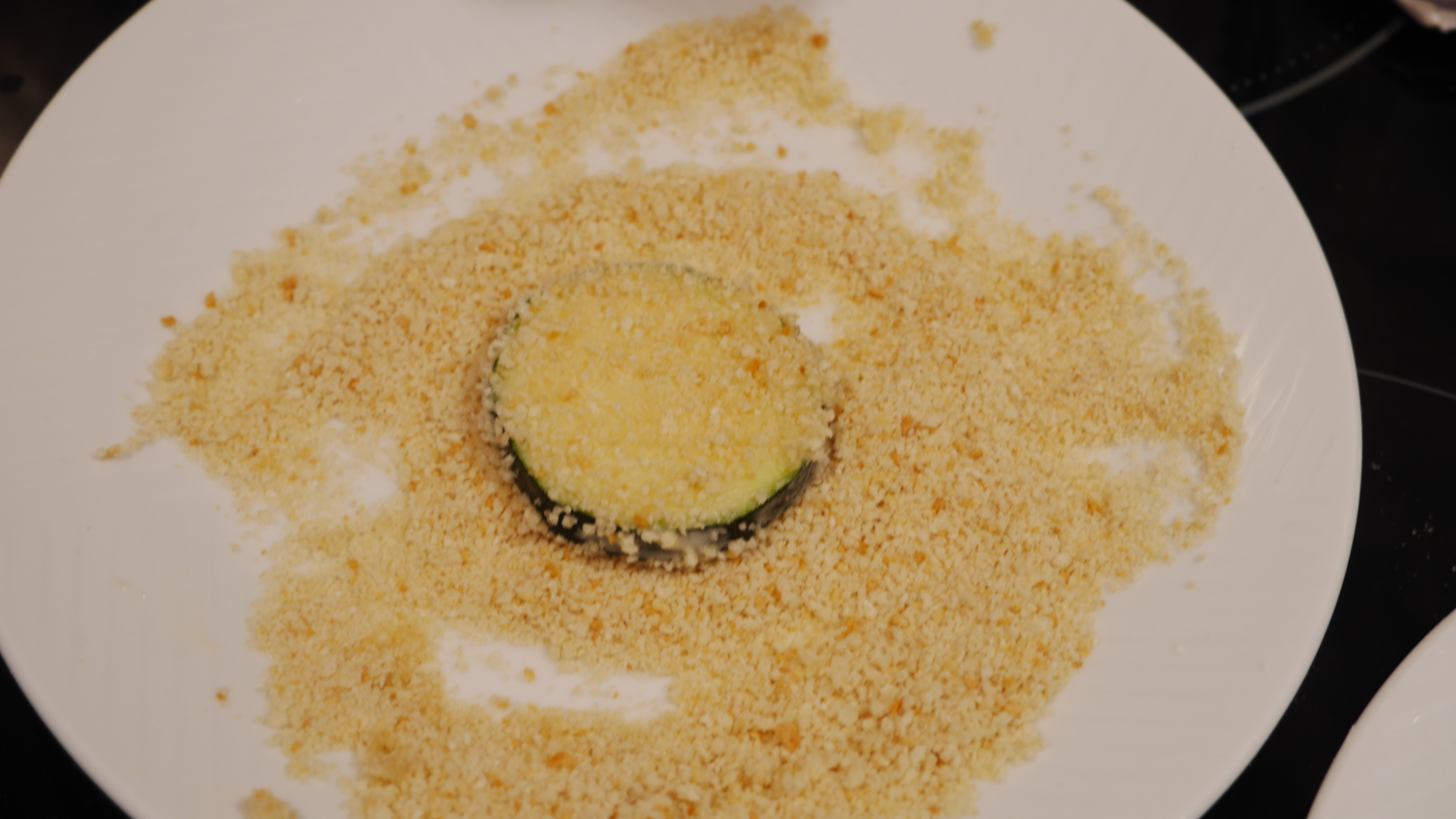
So even though I’m not supposed to eat chickpeas, I thought I’d give this a go as I might be able to tolerate the small amount needed, if it was the best of all the options. I’ve seen a few vegan recipes using the mixture for this purpose.
However, this was the one that went the least well intially . I found it really hard to get a smooth paste with the gram flour, and it was really difficult to sieve it.
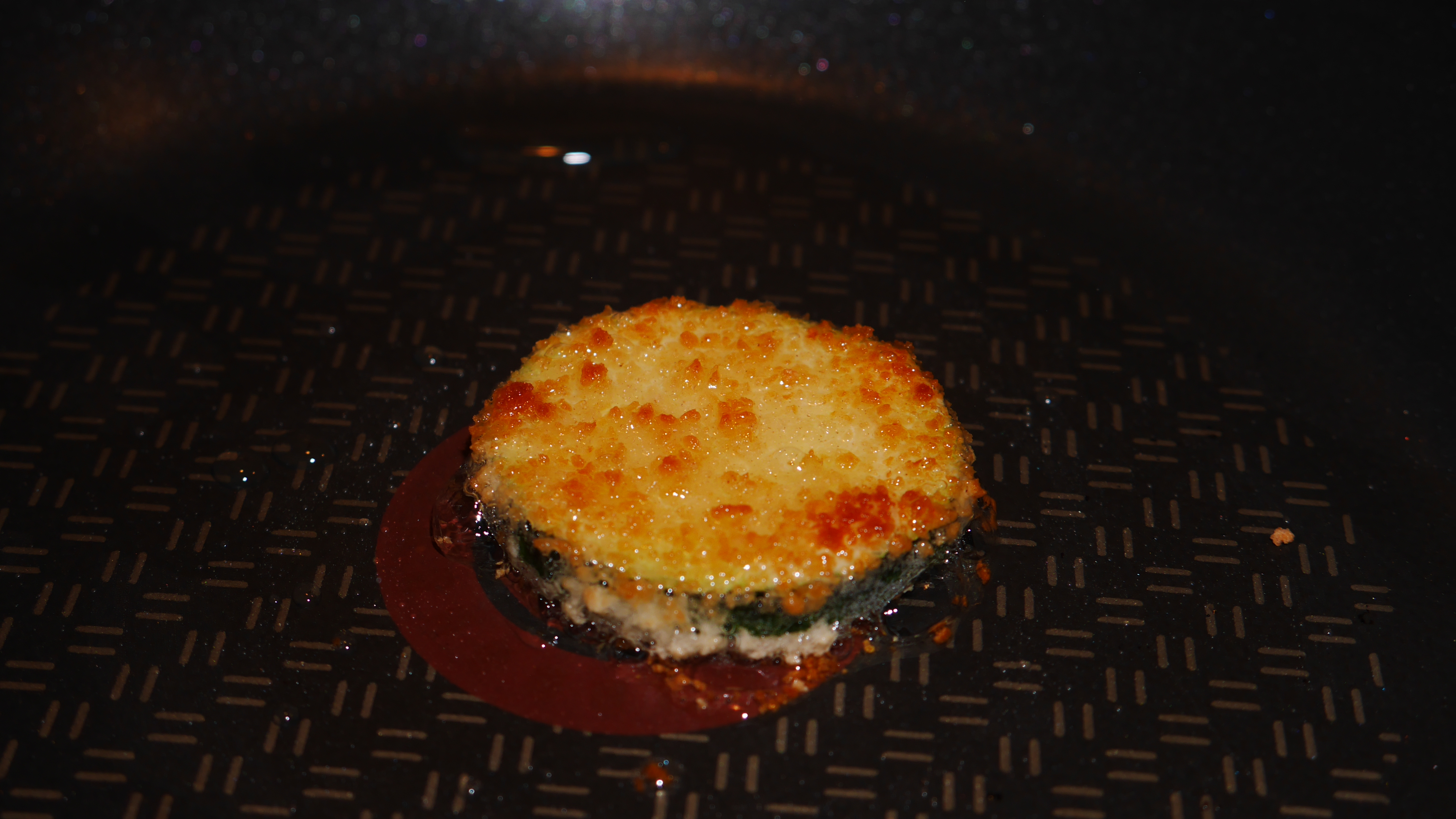
However, once I left it for a few minutes white I did the first two types of liquid, it really did look somewhat eggy. It went on to the courgette easily and the breadcrumbs stuck nicely. Unsurprisingly, the breadcrumbs stuck really well to this one, and it tasted good.
Trial 4: Plain Flour and Water
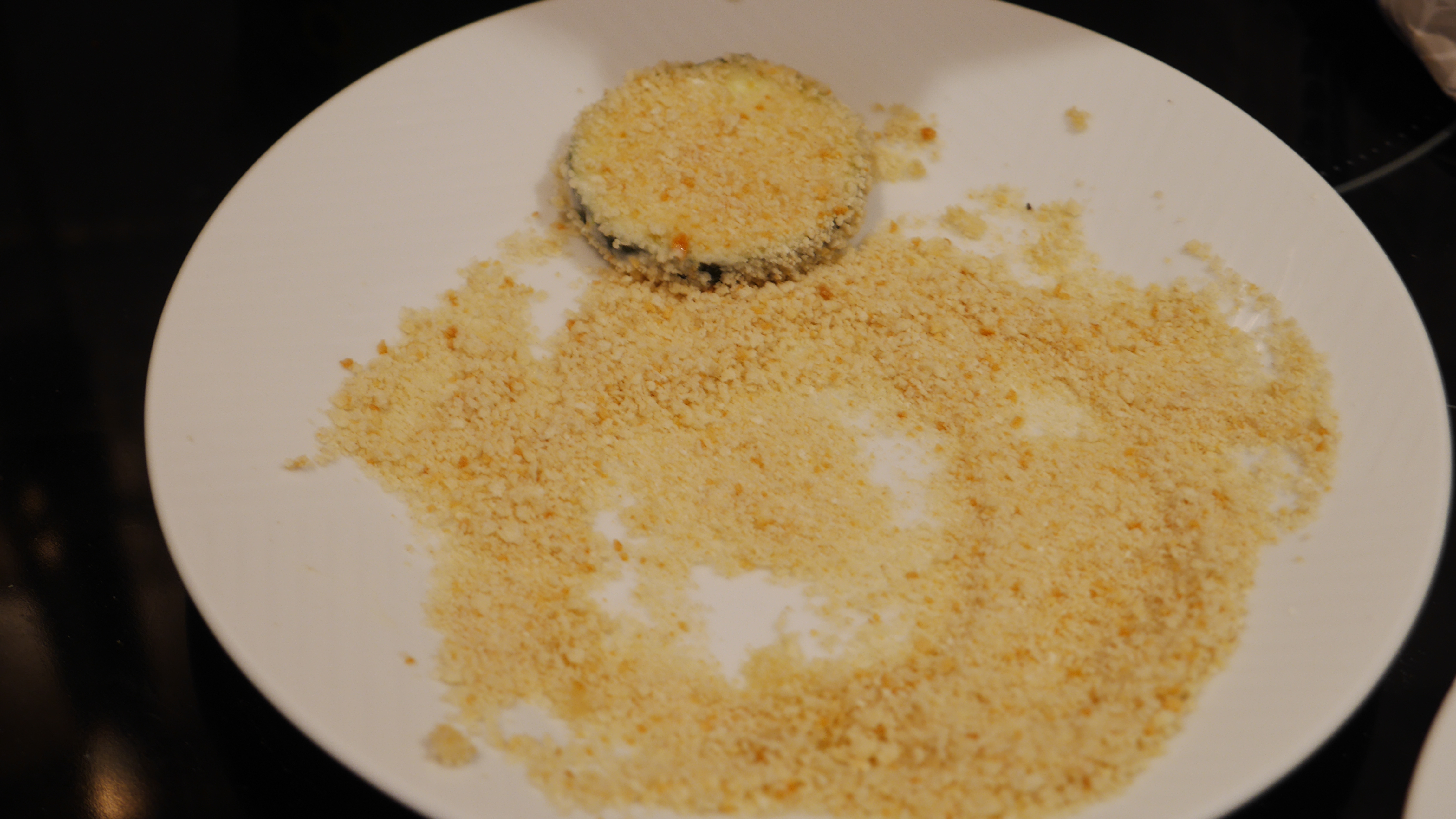
I had the least hope about this one going in, as I wasn’t sure it would work, but actually it went quite well. I mixed flour and water to get an egg-like consistency, and the dipping stages were easy.
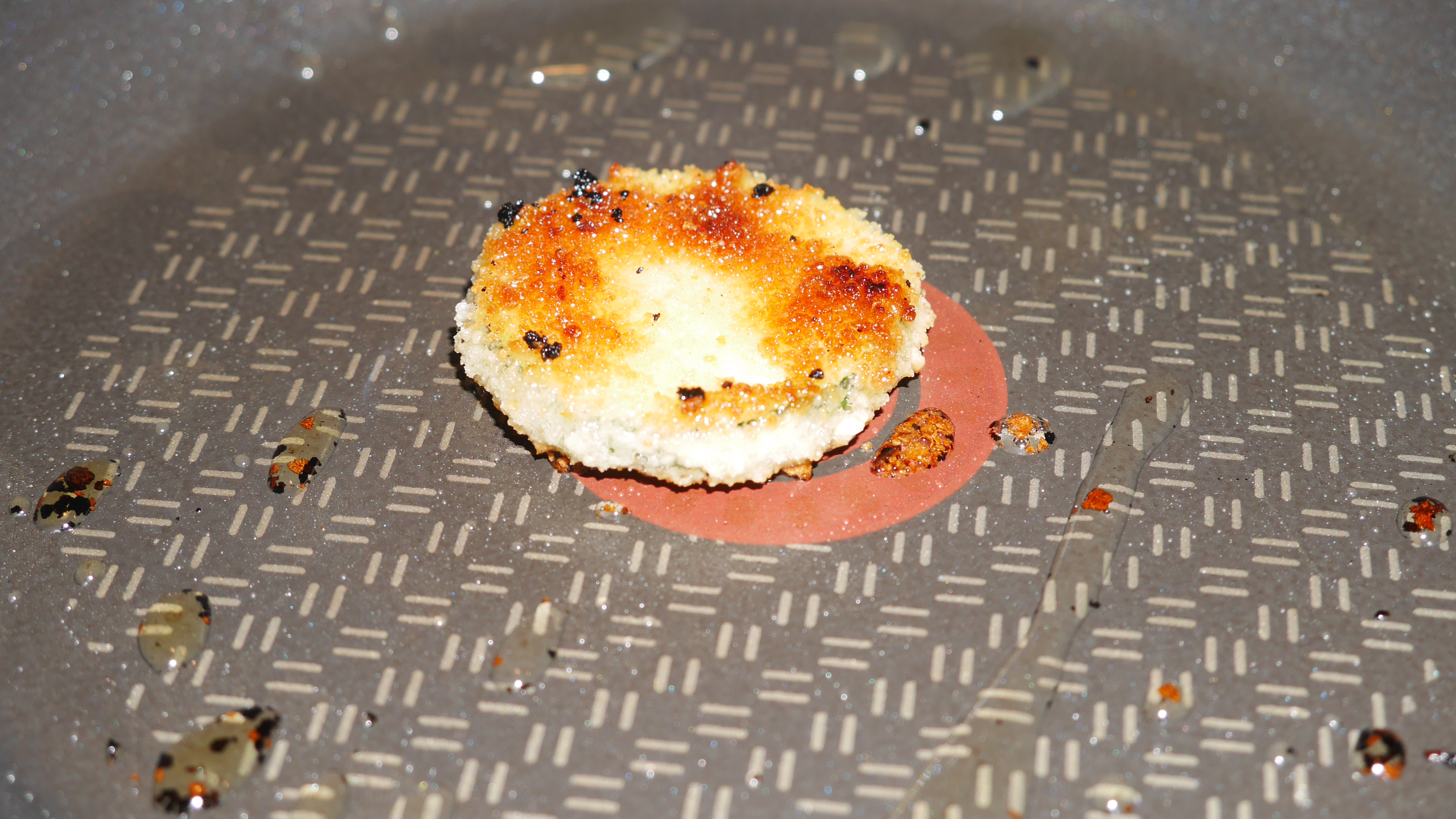
The breadcrumbs stuck nicely to the goopy flour mix, and few came off in the pan. It tasted fine, pretty much the same as the other two I’d already tried, so actually I’d recommend it.
Trial 5: Flax Egg and Water
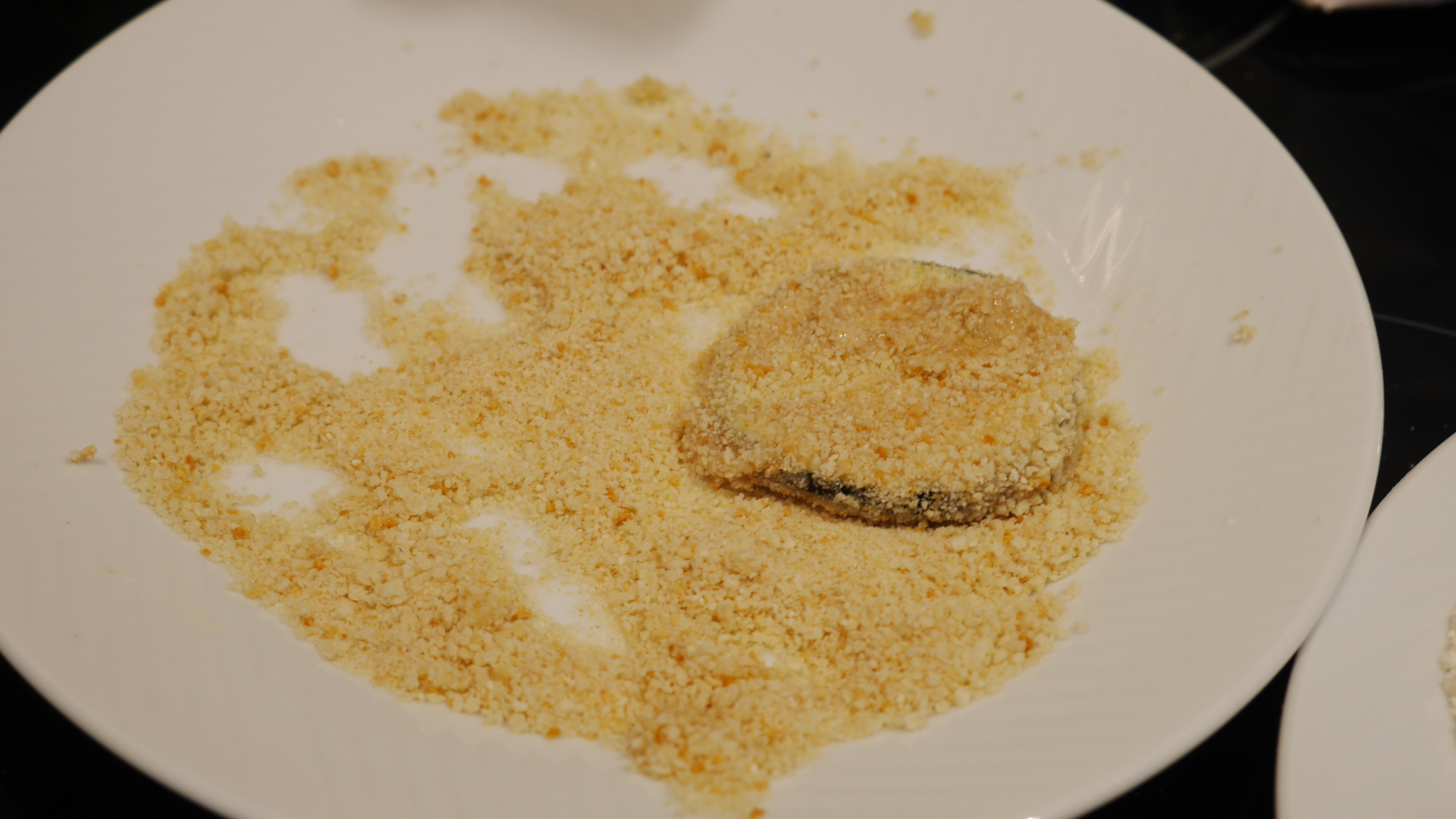
I know that another popular option is to use vegan mayonnaise, but I’ve yet to find one that I can actually eat as they contain so many other ingredients.
I make my flax egg with 1 tablespoon of ground flax to 2.5 tablespoons of cold water. I stir it, then leave it to sit for 10 minutes. The mixture was *really* gloopy, and I found it really hard to get it to stick to the courgette- you can see the gloopy bits in the picture.
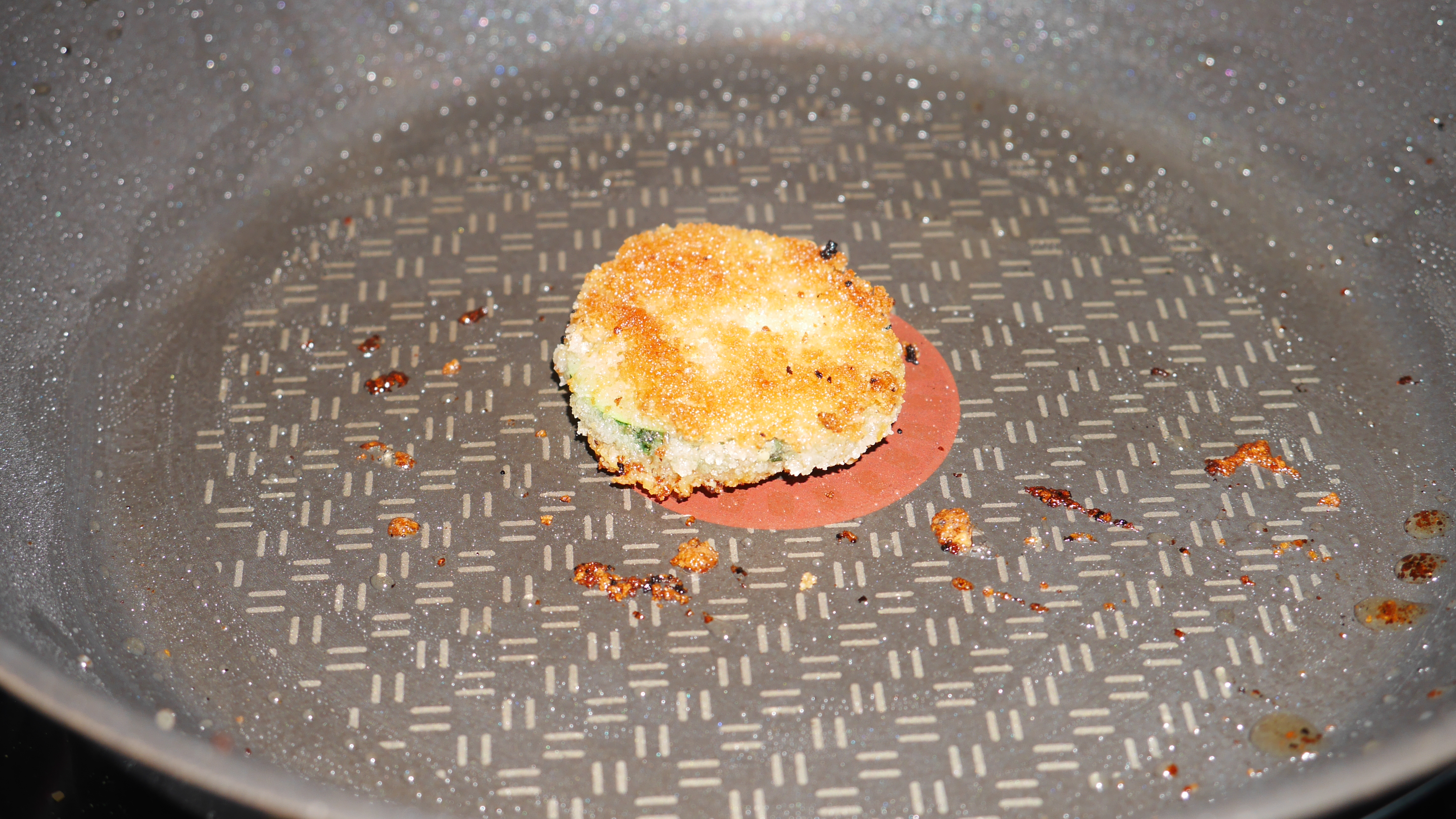
However, I tried using my pastry brush, and things went a lot more smoothly. It does eventually get gunked up from the flour layer, but it’s much easier to get an even coating of the flax mix over the courgette. This one had a slightly nutty taste, which I thought was nice.
Other options
My only variable during these stages was the liquid element, but I also wanted to try out different things for the first stage. I kept using the flax egg with these ones.
Semolina: I used a pretty fine grind, and it attached quite well, and added a bit more of a crunch
Rice flour: To be honest, I couldn’t tell the difference between this and plain flour, it worked just as well.
The Verdict
I think that the flax egg is my solution of choice for breading things. It’s more predictable to make up than the other options, although they would definitely work in a pinch. The clear exception is oil, which did not work at all.
I’d also definitely recommend using a brush- I tried it with the other things after it worked well on the flax egg, and it just makes for a much more even covering.
 Adventures in Low Histamine Eating